

Insights from Esthetician Stacia at KLS Aesthetics
At KLS Aesthetics, skincare is rooted in education, experience, and understanding that every skin journey is unique. Behind every treatment room is a professional who understands that skin concerns affect everyone including the experts.
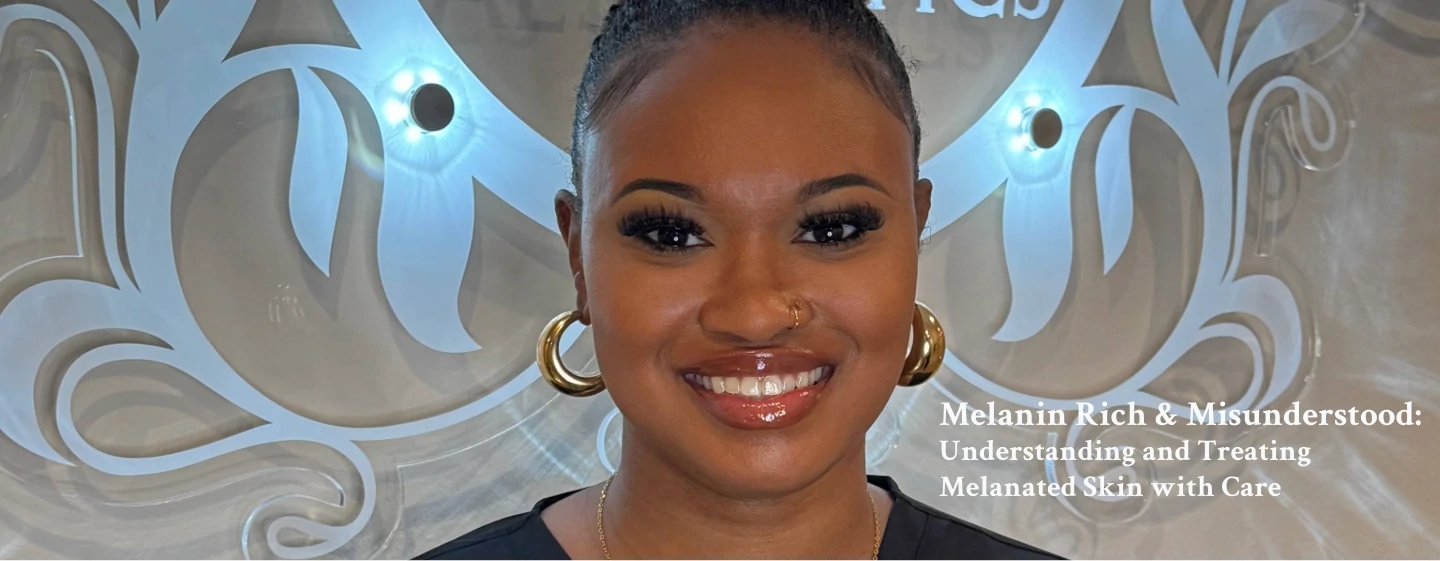
Stacia, a licensed esthetician at KLS Aesthetics, knows this firsthand. As a Black woman and skincare professional, she brings both personal experience and clinical knowledge to treating melanated skin, including common concerns such as acne, hyperpigmentation, ingrown hairs, and keloid scarring.
The Myth of “Perfect Skin” in the Esthetics Industry
Many people assume that estheticians have flawless skin. According to Stacia, that simply isn’t true.
“That’s definitely not the case. We’re human too, and many of us are still working through our own skin concerns.”
Like many individuals with deeper skin tones, Stacia has experienced post-inflammatory hyperpigmentation (PIH), acne breakouts, and ingrown hairs all conditions that require careful treatment and consistency.
Her journey with acne began long before she entered the skincare industry. As a teenager, she struggled with breakouts and PIH, often making things worse by picking at blemishes.
“Over time, I was able to improve my skin through consistency, patience, and a simple skincare routine. Now that I’m licensed, I understand what was actually happening in my skin and how to properly treat and prevent it.”
Today, that knowledge allows her to guide clients through their own skincare journeys with empathy and expertise.
Understanding the Fitzpatrick Skin Type Scale
When discussing melanated skin, Stacia often explains the Fitzpatrick Skin Type Scale, which professionals use to classify how skin responds to UV exposure.
“The Fitzpatrick scale measures how the skin reacts to UV exposure based on melanin levels,” Stacia explains. “Types V and VI represent deeper, more melanated skin tones, while types I through IV are lighter and tend to burn more easily.”
While melanin does offer some natural sun protection, it does not eliminate the risk of skin damage or skin cancer. Daily sun protection remains essential for all skin tones.
Why Melanated Skin Requires Specialized Care
Treating deeper skin tones requires a thoughtful approach.
Stacia explains that certain conditions, especially post-inflammatory hyperpigmentation and keloid scarring can be triggered if the skin is over-treated.
“Aggressive treatments like high-energy lasers or deep chemical peels such as strong TCA or Jessner formulas can damage melanocytes and worsen pigmentation if they’re not done correctly.”
That doesn’t mean these treatments are never appropriate. Instead, they must be performed carefully by experienced providers who understand the nuances of treating melanated skin.
The Truth About Sunscreen and Darker Skin
One of the most common skincare myths is that people with darker skin tones do not need sunscreen.
Stacia is quick to correct this misconception.
“Melanin does offer some natural protection, but it does not eliminate the risk of sun damage or skin cancer.”
In fact, skin cancer in people of color is often diagnosed later, which can make it more dangerous. Consistent use of sunscreen is essential not only for overall skin health but also for preventing worsening hyperpigmentation.
Why Ingrown Hairs Are More Common in Melanated Skin
Another concern Stacia frequently addresses is pseudofolliculitis barbae, more commonly known as ingrown hairs.
Because many people with melanated skin have coarser, tightly coiled hair, the hair follicle is more likely to grow back into the skin instead of outward.
Her advice for preventing ingrown hairs includes:
- Avoid shaving against the grain
- Do not shave too closely to the skin
- Maintain regular exfoliation
- Allow hair to grow slightly longer between shaves
These simple steps can significantly reduce irritation and inflammation.
Safe Treatments for Melanated Skin at KLS Aesthetics
At KLS Aesthetics, treatments are selected carefully to support skin health without triggering unnecessary inflammation or pigmentation concerns.
Stacia often recommends services such as:
- Microneedling to improve skin texture and stimulate collagen
- Customized facials designed for individual skin concerns
- Exfoliation treatments like dermaplaning or microdermabrasion
- Gentle chemical peels tailored for melanated skin
- Targeted brightening treatments for hyperpigmentation
“The goal is always to improve the skin without causing unnecessary irritation or damage. We focus on long term skin health and real results.”
She also emphasizes that professional treatments are only part of the process.
“We’re not magicians. Our clients do the work at home and stay consistent with their routines. We’re here to guide and support them through the process.”
Progress, Not Perfection
Stacia’s story is a powerful reminder that skincare is a journey.
Even professionals in the field continue to learn, adapt, and care for their own skin. With the right education, consistency, and professional guidance, healthier skin is always possible.
At KLS Aesthetics, that philosophy is at the heart of every treatment.